


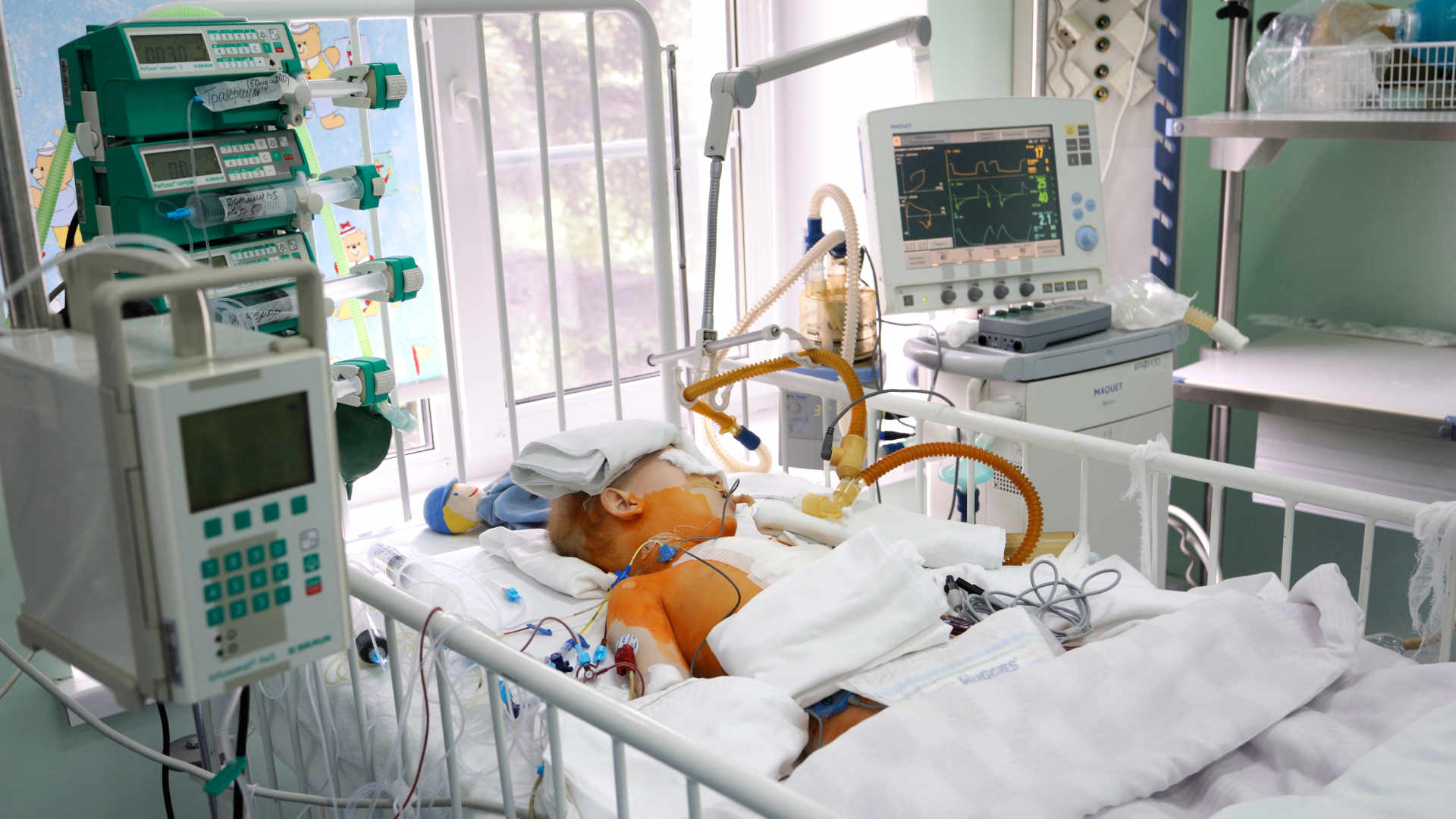
Publication
- Title: Gastric Residual Volume Assessment in Critically Ill Children: The GASTRIC-PICU Randomized Clinical Trial
- Acronym: GASTRIC-PICU
- Year: 2026
- Journal published in: JAMA
- Citation: Tume LN, Mouncey PR, Broomhall JM, et al; GASTRIC-PICU Investigators of the Paediatric Critical Care Society Study Group. Gastric Residual Volume Assessment in Critically Ill Children: The GASTRIC-PICU Randomized Clinical Trial. JAMA. Published online June 12, 2026.
Context & Rationale
-
Background
- Underfeeding is common in paediatric intensive care, particularly early in invasive mechanical ventilation.
- Routine gastric residual volume (GRV) aspiration has historically been used as a bedside surrogate for feed tolerance.
- The biological assumption was that a “high” aspirated GRV identifies delayed gastric emptying, predicts vomiting or aspiration, and permits safer interruption or reduction of feeds.
- The countervailing concern is that GRV measurement itself creates feed interruption, reduces calorie and protein delivery, consumes nursing time, and may be poorly standardised.
- The published GASTRIC-PICU protocol framed this as a deimplementation question: whether a widespread nursing and feeding practice could be safely removed from routine care. 1
- The accompanying editorial characterised the trial as a test of a persistent practice that continued despite observational evidence, practice variability, and previous position-statement scepticism. 2
- Earlier feasibility work showed that routine GRV measurement was embedded in UK PICU practice and that clinicians’ principal concern about stopping it was vomiting and aspiration. 3
- Mechanistically, the validity of aspiration-derived GRV was already weak: point-of-care gastric ultrasound work in critically ill children found aspiration to be an imprecise method of estimating gastric contents. 4
-
Research Question/Hypothesis
- The clinical hypothesis was that not routinely assessing GRV would be non-inferior to routine 6-hourly GRV assessment for survival and ventilator-free days at 30 days.
- The nutritional hypothesis was that not routinely assessing GRV would be superior for the percentage of estimated energy requirements achieved by 72 hours.
- The trial directly addressed the absence of a large paediatric RCT, after prior adult, neonatal, and observational paediatric data had challenged routine GRV monitoring. 5
-
Why This Matters
- The bedside decision being tested was common, binary, and highly scalable: scheduled GRV aspiration versus clinical assessment alone.
- A safe reduction in routine GRV checks would remove a low-value process, reduce feed interruption, reduce nursing workload, and simplify feeding protocols.
- A harmful effect would have been clinically important, because aspiration, vomiting, ventilator-associated pneumonia (VAP), and necrotising enterocolitis (NEC) are the outcomes clinicians most fear when feeding ventilated children.
Design & Methods
- Research Question: In critically ill children receiving invasive mechanical ventilation and gastric enteral feeding, is no routine GRV assessment non-inferior to routine at least 6-hourly GRV assessment for survival and ventilator-free days at 30 days, and does it improve early nutritional delivery?
- Study Type: Pragmatic, multicentre, parallel-group, randomised, open-label, non-inferiority trial with a co-primary nutritional superiority outcome.
- Setting: Paediatric intensive care units: 23 UK PICUs and 1 Swiss PICU.
- Randomisation: 1:1 central web-based randomisation using a computer-generated sequence, stratified by site, age, and reason for admission.
- Population:
- Children aged ≥37 weeks corrected gestational age to <16 years.
- Receiving invasive mechanical ventilation.
- Not planned for extubation within the next 48 hours.
- Starting or already receiving enteral feeding via the gastric route, including gastrostomy.
- Enrolled within 24 hours of first meeting eligibility criteria.
- Key exclusions: post-pyloric feeding or jejunostomy, end-of-life care plan or imminent death, long-term invasive ventilation, current or recent gut pathology or surgery, active gastrointestinal bleeding, NEC, and previous enrolment within 6 months.
- Research without prior consent was used because feeding decisions occur early during critical illness; parents or guardians were approached after randomisation. 1
- Intervention:
- No routine GRV assessment to guide enteral feeding.
- Feed tolerance was assessed using clinical signs: vomiting, abdominal distension, abdominal pain or tenderness, and overall clinical status.
- GRV assessment was still permitted for justified clinical reasons, including before procedures, after vomiting, or with clinical deterioration.
- All other feeding practice, including feed type, feed advancement, and route management, followed local PICU protocols.
- Comparison:
- Usual care with routine GRV assessment at least every 6 hours to guide enteral feeding.
- Control patients were also assessed clinically for feed intolerance.
- Local feeding protocols otherwise determined feed initiation, escalation, prokinetics, formula changes, and escalation to post-pyloric or parenteral nutrition.
- The protocol’s example control pathway used a threshold of GRV >5 mL/kg, or >250 mL in children >40 kg, to trigger feed withholding and reassessment; the pragmatic trial tested routine assessment as a practice, not a single universal GRV threshold. 1
- Blinding:
- Unblinded at the bedside, because the intervention was a visible nursing and feeding process.
- Blinding was not feasible for nurses, dietitians, or treating clinicians.
- The primary clinical outcome was relatively objective, but feeding decisions and VAP diagnosis were vulnerable to performance and detection bias.
- Statistics:
- Power calculation: 4000 evaluable children provided 90% power to demonstrate non-inferiority for the clinical co-primary outcome using a two-sided 95% CI, with a non-inferiority margin corresponding to an odds ratio lower bound of 0.833, equivalent to a 0.8% absolute mortality increase and a 12-hour median ventilation difference; the target sample was 4700 to allow for 10% crossover and 5% withdrawal.
- The nutritional co-primary outcome was powered for a 4 percentage-point absolute difference in energy intake at 72 hours, with blinded sample-size re-estimation because the standard deviation was uncertain.
- The clinical co-primary outcome was analysed with adjusted proportional odds logistic regression in both intention-to-treat and per-protocol populations.
- Non-inferiority required the 95% CI to exclude the prespecified harm margin in both intention-to-treat and per-protocol analyses.
- The nutritional co-primary outcome was analysed using adjusted linear regression in the intention-to-treat population.
- Follow-Up Period:
- 72 hours for the nutritional co-primary outcome.
- 7 days for key feeding interruption and feed tolerance outcomes.
- 30 days for survival, ventilator-free days, VAP, NEC, and safety outcomes.
- PICU and hospital discharge for length of stay outcomes.
- Six-month mortality, health-related quality of life, and economic outcomes were planned but reported separately from the main JAMA publication.
Key Results
This trial was not stopped early. It completed recruitment to the target of 4700 randomised children; nutritional co-primary data collection stopped after a blinded sample-size re-estimation showed sufficient nutritional outcome data, not because of efficacy or harm.
| Outcome | No routine GRV assessment | Usual care | Effect | p value / 95% CI | Notes |
|---|---|---|---|---|---|
| Survival and days free from mechanical ventilation at 30 days, ITT | 25 days (IQR 21 to 27); n=2220 | 25 days (IQR 21 to 27); n=2240 | Adjusted OR 0.95 | 95% CI 0.86 to 1.05; P=.006 for non-inferiority | Non-inferiority criterion met; lower CI bound exceeded 0.833. |
| Survival and days free from mechanical ventilation at 30 days, per protocol | 26 days (IQR 22 to 27); n=1657 | 26 days (IQR 22 to 27); n=2071 | Adjusted OR 1.01 | 95% CI 0.90 to 1.13; P<.001 for non-inferiority | Per-protocol result supported the ITT inference. |
| Estimated energy requirements achieved by 72 hours | 80.3% ± 28.2%; n=1424 | 76.8% ± 30.5%; n=1512 | Adjusted MD +3.24 percentage points | 95% CI 1.29 to 5.19; P<.001 | Statistically significant nutritional superiority; absolute effect modest. |
| Time with no enteral feed in first 7 days | 20.7 ± 21.7 h; n=1992 | 22.7 ± 23.5 h; n=2105 | Adjusted MD −1.7 h | 95% CI −3.1 to −0.4; P<.001 | Less feed interruption with no routine GRV assessment. |
| Vomiting leading to feed stoppage in first 7 days | 204/1992 (10.2%) | 190/2105 (9.0%) | Adjusted OR 1.16 | 95% CI 0.94 to 1.43; P=.17 | No statistically significant increase. |
| Time to achievement of target calories | 6.0 days (IQR 5.0 to 6.0); n=1417 | 6.0 days (IQR 5.0 to 6.0); n=1518 | Adjusted HR 1.01 | 95% CI 0.91 to 1.12; P=.86 | No difference in reaching full calorie target. |
| Time to achievement of target protein | <50% achieved target | <50% achieved target | Adjusted HR 1.03 | 95% CI 0.90 to 1.17; P=.68 | No difference; most patients did not reach target protein by day 7. |
| Necrotising enterocolitis in infants | 30/1158 (2.6%) | 31/1228 (2.5%) | Adjusted OR 1.05 | 95% CI 0.63 to 1.76; P=.85 | No safety signal for NEC. |
| Ventilator-associated pneumonia | 120/2007 (6.0%) | 114/2128 (5.4%) | Adjusted OR 1.12 | 95% CI 0.85 to 1.47; P=.42 | No statistically significant increase in VAP. |
| VAP rate per 1000 hours of ventilation | 0.37 | 0.34 | IRR 1.09 | 95% CI 0.84 to 1.41; P=.52 | Rate-based VAP analysis consistent with binary analysis. |
| Other documented healthcare-acquired infection | 222/2007 (11.0%) | 252/2128 (11.8%) | Adjusted OR 0.93 | 95% CI 0.76 to 1.13; P=.47 | No between-group difference. |
| PICU length of stay among survivors | 5 days (IQR 3 to 11); n=1922 | 5 days (IQR 3 to 10); n=2038 | Probabilistic index 0.50 | 95% CI 0.48 to 0.52; P=.79 | No difference in PICU stay among survivors. |
| 30-day mortality | 87/2233 (3.9%) | 100/2248 (4.4%) | Adjusted OR 0.86 | 95% CI 0.64 to 1.16 | Individual component of clinical co-primary outcome; reported in supplement. 6 |
| Duration of mechanical ventilation | Mean 7.0 ± 6.7 days; median 5 days (IQR 3 to 8) | Mean 6.8 ± 6.6 days; median 4 days (IQR 3 to 8) | Adjusted MD +0.23 days | 95% CI −0.17 to 0.62 | Individual component; no clinically important separation. 6 |
| Serious adverse events | 2 events: ischaemic colitis; transverse colon perforation | 1 event: caecal perforation | Not reported | Not reported | Very low event numbers; no clear between-group safety pattern. |
- Subgroup analyses by reason for admission did not show meaningful clinical heterogeneity: survival and ventilator-free days ORs were 1.00 (95% CI 0.75 to 1.34) for cardiovascular admissions, 0.94 (95% CI 0.79 to 1.13) for respiratory admissions, and 0.98 (95% CI 0.83 to 1.14) for other admissions; interaction P=.92.
- For the nutritional co-primary outcome, the mean differences were +6.96 percentage points (95% CI 2.02 to 11.90) in cardiovascular admissions, +2.55 (95% CI −0.62 to 5.72) in respiratory admissions, and +2.21 (95% CI −0.79 to 5.22) in other admissions; interaction P=.25.
- The PIM-3 interaction for the clinical co-primary outcome was P=.02, but the subgroup ORs ranged from 0.88 to 1.04 without a persuasive monotonic pattern; the corresponding nutritional interaction was P=.91.
- The editorial judged the early nutritional gain as statistically clear but of uncertain clinical significance, while emphasising that the feared excess VAP or NEC signal did not appear. 2
Internal Validity
- Randomisation and Allocation:
- Centralised web-based randomisation and concealed allocation minimised selection bias.
- Stratification by site, age, and reason for admission was appropriate because these variables are strongly related to PICU outcomes.
- The very large sample size reduced the risk that clinically important baseline imbalances would drive the findings.
- Dropout and Post-randomisation Exclusions:
- Of 4700 randomised children, 4460 were included in the clinical ITT analysis: 2220 in no routine GRV assessment and 2240 in usual care.
- 159 parents requested removal of all data and 18 were not approached for consent.
- Refusal, withdrawal, or opt-out was more frequent in the no routine GRV group: 281/2352 (11.9%) versus 157/2348 (6.7%). 6
- The deferred-consent framework and approvals permitting retention of key safety and primary outcome data mitigated, but did not abolish, the risk of post-randomisation attrition bias.
- The nutritional ITT analysis included 2936 children after blinded sample-size re-estimation and consent-related exclusions: 1424 in no routine GRV assessment and 1512 in usual care.
- Performance and Detection Bias:
- Bedside blinding was impossible.
- The clinical co-primary outcome was relatively objective, but decisions to aspirate non-routinely, stop feeds, diagnose feed intolerance, and prescribe antibiotics for presumed VAP could be influenced by knowledge of allocation.
- The protocol defined VAP pragmatically as any new antibiotic course prescribed for presumed or proven VAP, which is clinically meaningful but less specific than adjudicated radiographic or microbiological definitions. 1
- Protocol Adherence:
- Separation was substantial: GRV assessment occurred in 1267/2248 (56.4%) no routine GRV patients versus 2208/2258 (97.8%) usual-care patients.
- Total GRV assessments were 5903 in the no routine group versus 48,516 in usual care.
- Assessment intensity differed by almost eight-fold: 0.48 GRV assessments per 24 hours versus 3.79 per 24 hours. 6
- In the no routine group, 357/2248 (15.9%) had protocol deviations, generating 1427 deviations; in usual care, 29/2258 (1.3%) had protocol deviations, generating 69 deviations. 6
- These deviations would be expected to dilute, rather than exaggerate, the effect of stopping routine GRV assessment.
- Baseline Characteristics:
- Groups were well balanced.
- Median age was 8 months in both arms.
- More than half the cohort was younger than 1 year.
- PIM-3 scores, reason for admission, weight, baseline feeding status, and pre-randomisation PICU time were similar.
- The cohort was sufficiently clinically relevant because all children were invasively ventilated and gastric-fed, but overall mortality was low at 3.9% to 4.4%, which makes mortality alone insensitive as an endpoint.
- Heterogeneity:
- Clinical heterogeneity was expected in a broad PICU population.
- Pragmatic heterogeneity improved generalisability but reduced mechanistic purity.
- No consistent heterogeneity was observed by reason for admission.
- The isolated PIM-3 clinical interaction (P=.02) should be interpreted cautiously because the trial had multiple subgroup comparisons and no coherent dose-response pattern.
- Timing:
- Randomisation occurred within 24 hours of meeting eligibility, fitting the clinical window in which early enteral nutrition is initiated.
- This timing was appropriate because GRV measurement affects early feed advancement and early nutritional deficit accumulation.
- Dose:
- The “dose” of the intervention was removal of scheduled routine GRV assessment, not prohibition of clinically indicated gastric aspiration.
- This is the clinically relevant deimplementation strategy because it preserves judgement for vomiting, deterioration, tube-position concerns, and procedures.
- Observed separation in GRV assessment frequency indicates that the intervention was delivered at a sufficient dose to test the core causal question.
- Separation of the Variable of Interest:
- GRV assessments: 0.48 per 24 hours in no routine GRV assessment versus 3.79 per 24 hours in usual care.
- Feed stopped for high GRV: 80/2009 (4.0%) in no routine GRV assessment versus 406/2131 (19.1%) in usual care. 6
- Time with no enteral feed: 20.7 ± 21.7 hours versus 22.7 ± 23.5 hours; adjusted MD −1.7 hours.
- Energy delivery at 72 hours: 80.3% ± 28.2% versus 76.8% ± 30.5%; adjusted MD +3.24 percentage points.
- Key Delivery Aspects:
- Local feeding protocols were retained, strengthening pragmatic relevance.
- The trade-off is that the trial did not isolate the effects of feed type, feed advancement rate, bolus versus continuous feeding, prokinetics, or formula choice.
- Initial feeding mode was balanced: continuous feeding in 1293/2219 (58.3%) versus 1294/2232 (58.0%), and bolus feeding in 926/2219 (41.7%) versus 938/2232 (42.0%). 6
- Crossover:
- Classic crossover was not the major issue; contamination occurred mainly through non-routine GRV checks in the intervention arm.
- Because the intervention arm still had 5903 GRV assessments, the trial estimates the effect of stopping scheduled routine GRV measurement rather than the effect of never aspirating the stomach.
- Outcome Assessment:
- Survival and ventilator-free days were appropriate, patient-centred, and largely objective.
- The ordinal composite allowed mortality and duration of ventilation to be analysed in a single hierarchy.
- The nutritional co-primary outcome was clinically relevant to the mechanism but remains a surrogate for downstream recovery.
- VAP and feed intolerance outcomes were more susceptible to ascertainment and treatment-threshold bias.
- Statistical Rigor:
- The non-inferiority margin was clinically interpretable.
- Both ITT and per-protocol analyses supported non-inferiority.
- The complier-average causal effect analyses were directionally consistent: clinical OR 0.99 (95% CI 0.89 to 1.10) and nutritional MD +3.90 percentage points (95% CI 1.55 to 6.25).
- The blinded sample-size re-estimation for the nutritional outcome was prespecified and did not use unblinded treatment effects.
Conclusion on Internal Validity: Internal validity appears strong. The main vulnerabilities are unblinded care, differential consent-related attrition, and some contamination in the no routine GRV group; however, concealed randomisation, large sample size, substantial exposure separation, prespecified analyses, and concordant ITT/per-protocol results make the main inference robust.
External Validity
- Population Representativeness:
- The trial population was highly representative of invasively ventilated, gastric-fed children in UK PICU practice.
- The trial included a large infant population, with median age 8 months and more than half younger than 1 year.
- Recruitment across 23 of 27 UK PICUs plus 1 Swiss PICU supports broad applicability to high-resource paediatric critical care systems.
- The editorial emphasised the scale of recruitment and described GASTRIC-PICU as the largest individually randomised trial conducted in PICUs. 2
- Important Exclusions:
- Premature neonates were not studied.
- Children receiving non-invasive respiratory support were not studied.
- Children with post-pyloric feeding, jejunostomy, active or recent gut pathology, intestinal surgery, active gastrointestinal bleeding, or NEC were excluded.
- Children receiving long-term invasive ventilation were excluded.
- The findings should not be extrapolated to these groups without caution.
- Applicability:
- The results apply most directly to PICUs where routine GRV checks are still used to guide gastric feeding in invasively ventilated children.
- The intervention is simple, low cost, and feasible in most high-resource PICUs.
- Implementation requires protocol change, nursing education, and reassurance that clinical signs remain central to assessing feed intolerance.
- Resource-limited settings may differ in nursing ratios, feeding protocols, aspiration-prevention practices, availability of dietetics, and VAP diagnostic thresholds.
- Clinical Boundary of the Finding:
- The trial supports abandoning scheduled routine GRV measurement.
- It does not support ignoring vomiting, abdominal distension, abdominal tenderness, suspected tube malposition, procedural risk, or acute clinical deterioration.
- The intervention preserved clinician discretion for justified aspiration.
Conclusion on External Validity: External validity is high for invasively ventilated, gastric-fed children in well-resourced PICUs using similar feeding and nursing systems. It is limited for premature neonates, non-invasive ventilation, gastrointestinal surgical/pathology populations, post-pyloric feeding, and long-term ventilation.
Strengths & Limitations
- Strengths:
- Very large trial: 4700 randomised children.
- Pragmatic design testing a real bedside practice.
- Broad multicentre recruitment across most UK PICUs plus a Swiss PICU.
- Concealed central randomisation.
- Clinically meaningful non-inferiority margin.
- Both ITT and per-protocol analyses required for non-inferiority and both were supportive.
- Excellent separation in actual GRV assessment exposure.
- Direct measurement of feared harms: vomiting-related feed stoppage, VAP, NEC, healthcare-acquired infection, and serious adverse events.
- Protocol publication and prespecified statistical approach, including blinded sample-size re-estimation for the nutritional outcome. 1
- Limitations:
- Unblinded intervention with potential performance and detection bias.
- Differential consent refusal or withdrawal: 11.9% in no routine GRV assessment versus 6.7% in usual care. 6
- Post-randomisation exclusions and missing outcome data, although proportionally modest.
- Intervention-arm contamination: 1267/2248 (56.4%) had at least one GRV assessment for any reason, reflecting real-world discretion but diluting separation.
- The nutritional benefit was statistically significant but small: +3.24 percentage points at 72 hours.
- VAP definition depended on clinician antibiotic prescribing for presumed or proven VAP.
- Rare harms cannot be definitively excluded: NEC adjusted OR 1.05 with 95% CI 0.63 to 1.76, and VAP adjusted OR 1.12 with 95% CI 0.85 to 1.47.
- Longer-term quality-of-life and economic results were planned but not included in the main report.
Interpretation & Why It Matters
-
Clinical practiceRoutine 6-hourly GRV measurement should not remain standard practice for invasively ventilated, gastric-fed children in PICU. Bedside assessment should focus on clinical signs of feed intolerance, with gastric aspiration reserved for specific clinical indications.
-
MechanismThe trial supports the view that aspirated GRV is not a sufficiently useful surrogate for aspiration risk, VAP risk, NEC risk, or feeding tolerance to justify routine scheduled measurement.
-
NutritionThe improvement in early energy delivery was modest but directionally important: 80.3% versus 76.8% of estimated requirements by 72 hours, with 1.7 fewer hours without enteral feeding in the first week.
-
SafetyThe feared trade-off did not materialise: vomiting-related feed stoppage, VAP, NEC, healthcare-acquired infection, PICU stay, and serious adverse events were not significantly increased.
-
DeimplementationGASTRIC-PICU is best understood as a high-quality deimplementation trial: it removes a ritualised practice with little evidential support, improves a proximate nutritional outcome, and does not worsen patient-centred clinical outcomes.
Controversies & Other Evidence
- Clinical significance of the nutritional endpoint:
- The nutritional superiority result was statistically robust but small: +3.24 percentage points at 72 hours.
- The editorial explicitly highlighted uncertainty about whether this magnitude of early energy delivery improvement translates into patient-centred recovery benefit. 2
- The counterargument is that the intervention is low cost, reduces unnecessary work, and did not increase detectable harm.
- Safety interpretation:
- No signal for excess VAP or NEC was observed.
- The confidence intervals still allow small increases in uncommon events, which matters because VAP and NEC are rare but serious.
- The practical inference is not “never aspirate”; it is “do not aspirate on a routine schedule in otherwise clinically tolerant children”.
- Unblinded behavioural intervention:
- The trial could not blind nurses or clinicians.
- This matters most for feed interruption, non-routine aspiration, and VAP ascertainment.
- The consistency of the primary clinical outcome across ITT, per-protocol, and complier-average causal effect analyses reduces concern that bias explains the central conclusion.
- Adult ICU evidence:
- The major adult RCT by Reignier and colleagues found that not monitoring residual gastric volume was not inferior for VAP and improved nutritional delivery. 7
- Subsequent meta-analytic evidence in critically ill patients similarly found no compelling signal that routine GRV monitoring reduces mortality or VAP, while suggesting fewer feeding interruptions without monitoring. 8
- Paediatric guidance before GASTRIC-PICU:
- The 2020 ESPNIC position statement already moved away from routine GRV assessment in critically ill children, but the recommendation preceded large paediatric RCT evidence. 9
- GASTRIC-PICU substantially strengthens the evidential basis for that practice direction in invasively ventilated PICU patients.
- Neonatal evidence and boundaries:
- Neonatal trials have also challenged routine gastric residual assessment, including the GRASS trial in preterm neonates and an earlier JAMA Pediatrics trial in extremely preterm infants. 1011
- Premature neonates remain a distinct population; GASTRIC-PICU does not settle neonatal practice.
- The neoGASTRIC trial protocol describes a large neonatal RCT evaluating avoidance of routine GRV measurement in neonatal critical care. 12
- Implementation controversy:
- The editorial’s central implementation challenge is whether a convincing RCT will change a practice that persisted despite previous observational data, consensus statements, and international practice variation. 2
- That makes the next question less methodological and more behavioural: how to deimplement an ingrained bedside ritual safely and consistently.
Further Reading
- 2026Orzol M, Chang I, Laing E, et al. Protocol for the GASTRIC-PICU randomised clinical trial.
- 2026Berris K, Murthy S. Residual Myths in Feeding Critically Ill Children.
- 2020Tume LN, Valla FV, Joosten K, et al. ESPNIC position statement and clinical recommendations on nutritional support during paediatric critical illness.
- 2013Reignier J, Mercier E, Le Gouge A, et al. Effect of not monitoring residual gastric volume in adults receiving mechanical ventilation and early enteral feeding.
- 2024Branagan A, Murphy C, O’Sullivan A, et al. The GRASS trial.
Summary
- GASTRIC-PICU randomised 4700 invasively ventilated, gastric-fed critically ill children to no routine GRV assessment versus routine at least 6-hourly GRV assessment.
- No routine GRV assessment was non-inferior for survival and ventilator-free days at 30 days: adjusted OR 0.95; 95% CI 0.86 to 1.05 in the ITT analysis.
- No routine GRV assessment modestly improved early energy delivery: 80.3% versus 76.8% of estimated requirements by 72 hours; adjusted MD +3.24 percentage points; 95% CI 1.29 to 5.19; P<.001.
- There was no significant increase in vomiting-related feed stoppage, VAP, NEC, healthcare-acquired infection, PICU length of stay, or serious adverse events.
- The trial supports deimplementation of scheduled GRV aspiration while preserving clinically indicated assessment for vomiting, deterioration, procedures, and suspected tube or gastrointestinal problems.
Overall Takeaway
GASTRIC-PICU is a landmark paediatric critical care deimplementation trial because it tests, at scale, a common bedside ritual that lacked strong evidential support. In invasively ventilated, gastric-fed children, routine GRV monitoring did not improve clinical outcomes and modestly impaired early nutritional delivery. The practical conclusion is clear: stop scheduled GRV checks in this population, and assess feed tolerance clinically.
Overall Summary
- Routine GRV assessment every 6 hours did not improve survival, ventilator-free days, VAP, NEC, infection, or length of stay.
- No routine GRV assessment improved early energy delivery by 3.24 percentage points at 72 hours.
- The intervention reduced GRV-driven feed stoppage without a detectable safety penalty.
- The trial changes practice for invasively ventilated, gastric-fed PICU patients, but not for premature neonates, NIV patients, post-pyloric feeding, or gastrointestinal surgical/pathology populations.
Bibliography
- 1.Orzol M, Chang I, Laing E, Tume LN, Mouncey PR, Broomhall JM, et al. Protocol for a randomized clinical trial to evaluate not routinely measuring gastric residual volume to guide enteral feeding versus routine measurement in mechanically ventilated critically ill children (GASTRIC-PICU). Pediatr Crit Care Med. 2026;27(5):655-665.
- 2.Berris K, Murthy S. Residual Myths in Feeding Critically Ill Children. JAMA. Published online June 12, 2026.
- 3.Tume LN, Woolfall K, Arch B, Roper L, Deja E, Jones AP, et al. Routine gastric residual volume measurement to guide enteral feeding in mechanically ventilated infants and children: the GASTRIC feasibility study. Health Technol Assess. 2020;24(23):1-120.
- 4.Valla FV, Cercueil E, Morice C, Tume LN, Bouvet L. Point-of-care gastric ultrasound confirms the inaccuracy of gastric residual volume measurement by aspiration in critically ill children: GastriPed Study. Front Pediatr. 2022;10:903944.
- 5.Tume LN, Bickerdike A, Latten L, Davies S, Lefèvre MH, Nicolas GW, et al. Routine gastric residual volume measurement and energy target achievement in the PICU: a comparison study. Eur J Pediatr. 2017;176(12):1637-1644.
- 6.Tume LN, Mouncey PR, Broomhall JM, et al. Supplemental Online Content to: Gastric Residual Volume Assessment in Critically Ill Children: The GASTRIC-PICU Randomized Clinical Trial. JAMA. 2026.
- 7.Reignier J, Mercier E, Le Gouge A, Boulain T, Desachy A, Bellec F, et al. Effect of not monitoring residual gastric volume on risk of ventilator-associated pneumonia in adults receiving mechanical ventilation and early enteral feeding: a randomized controlled trial. JAMA. 2013;309(3):249-256.
- 8.Feng L, Chen J, Xu Q. Is monitoring of gastric residual volume for critically ill patients with enteral nutrition necessary? A meta-analysis and systematic review. Int J Nurs Pract. 2023;29:e13124.
- 9.Tume LN, Valla FV, Joosten K, Jotterand Chaparro C, Latten L, Marino LV, et al. Nutritional support for children during critical illness: European Society of Pediatric and Neonatal Intensive Care metabolism, endocrine and nutrition section position statement and clinical recommendations. Intensive Care Med. 2020;46(3):411-425.
- 10.Branagan A, Murphy C, O’Sullivan A, et al. Influence of gastric residual assessment in preterm neonates on time to achieve enteral feeding (the GRASS trial): multi-centre, assessor-blinded randomised clinical trial. Eur J Pediatr. 2024;183(5):2325-2332.
- 11.Parker LA, Weaver M, Murgas Torrazza RJ, Shuster J, Li N, Krueger C, et al. Effect of gastric residual evaluation on enteral intake in extremely preterm infants: a randomized clinical trial. JAMA Pediatr. 2019;173(6):534-543.
- 12.Nuthall E, Rodriguez A, Andrzejewska I, et al; neoGASTRIC Collaborative Group. Avoiding routine gastric residual volume measurement in neonatal critical care (the neoGASTRIC trial): study protocol for a multi-centre, unblinded, randomised, controlled trial. Trials. 2026;27(1):106.
Added June 18th, 2026